
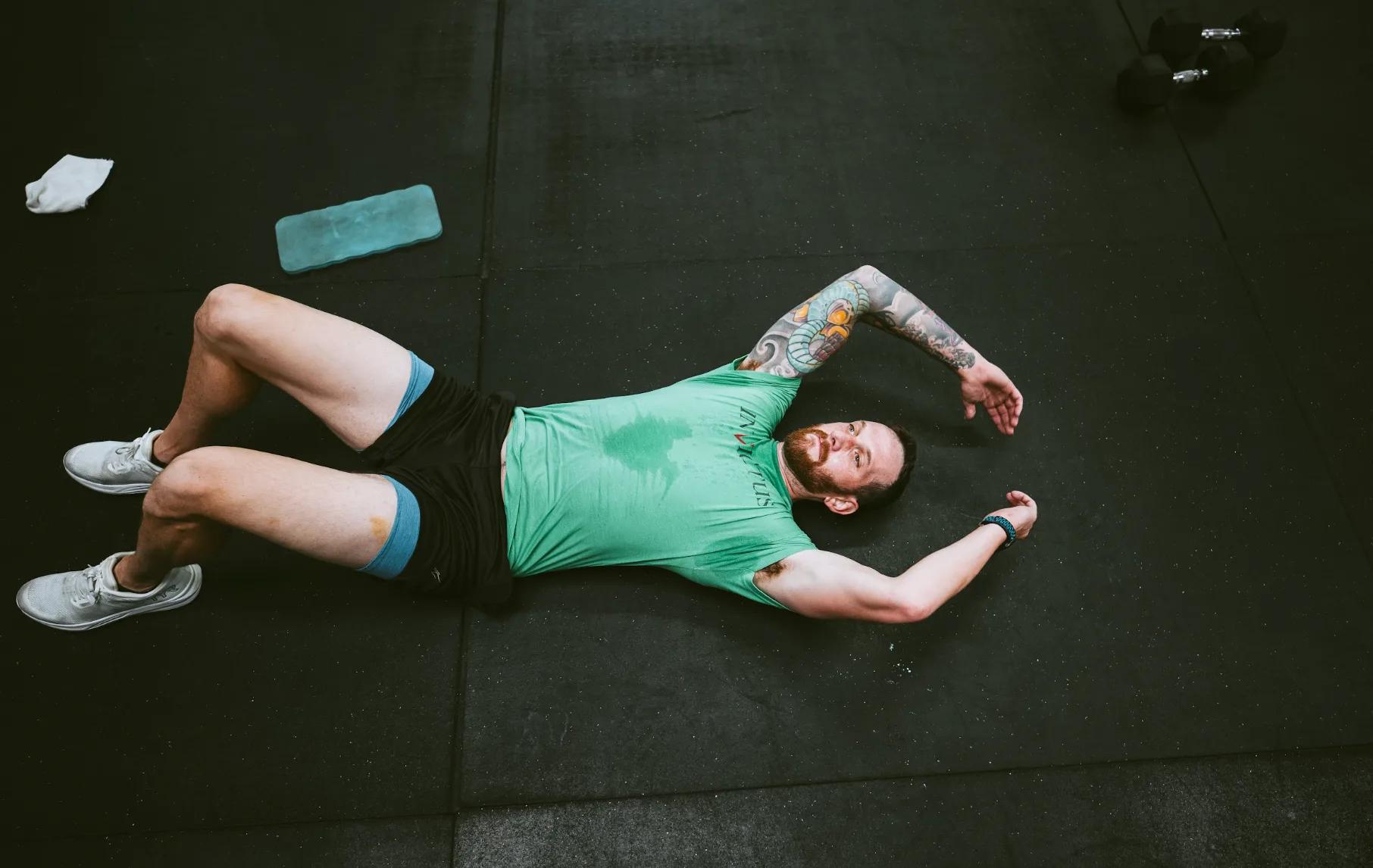
One of the biggest misconceptions I see in CrossFit is the belief that every conditioning session needs to leave you completely and utterly exhausted. Many people join CrossFit because they love the intensity. They enjoy pushing themselves, racing the clock, and finishing a workout completely spent. Those workouts are fun, challenging, and incredibly rewarding. But if every workout is done at maximum effort, you're missing one of the most important pieces of long-term fitness.
What is lower intensity training?
Ironically, one of the best ways to improve your performance in high-intensity workouts is to spend some time training at a much lower intensity. That might sound backwards, but there's a good reason for it. Your body relies on two primary energy systems during exercise. One is your anaerobic system, which powers short, intense efforts like heavy lifts, sprints, and fast-paced workouts. The other is your aerobic system, which provides most of the energy during longer-duration activities and helps you recover between the higher intensity efforts.
The mistake many people make is assuming that easy cardio only trains them to move slowly. In reality, it improves the engine that powers almost everything you do.
Training for a Stronger Aerobic Base
A stronger aerobic system allows you to recover faster between sets, catch your breath more quickly during workouts when you take a quick break or transition to the next movement, maintain a higher pace over longer workouts, and come back feeling fresher for tomorrow's training session. It also supports better heart health, improves endurance, and increases your body's ability to use fat as a fuel source during lower intensity activity.
Think of your aerobic system as the foundation of a house. No one gets excited about pouring the concrete foundation, but everything else depends on it. The stronger the foundation, the more your body can handle later.
One of the reasons our training works so well at Invictus is because it combines strength training, gymnastics, Olympic lifting, and conditioning into one program. Because the workouts are often fast-paced, many members accidentally spend most of their conditioning time somewhere in the middle, working too hard to maximize aerobic development, but not hard enough to produce the greatest high-intensity adaptations. Exercise physiologists sometimes refer to this as the "moderate intensity trap."
The solution isn't to eliminate high-intensity workouts. Those are still an essential part of becoming fitter. The solution is balance. Simply adding two or three easy aerobic sessions each week can dramatically improve your overall fitness without leaving you feeling beat up. These sessions aren't designed to test your toughness. They're designed to build your capacity.
How should aerobic exercise feel?
After completing a light aerobic exercise session, you should feel like you could do it again, easily. And the next day, and the day after that. If you are working harder than that, you are working too hard. For most people, that means exercising at a pace where you could comfortably carry on a conversation. Your breathing should be elevated, but controlled. Depending on your current fitness level, this might be a brisk walk, an easy jog, riding a bike, rowing, or swimming. The goal isn't to accumulate fatigue. The goal is to accumulate time. At first, these sessions may feel almost too easy. That's normal. Ideal, actually.
Many members have spent years believing that if a workout doesn't leave them exhausted, it isn't effective. But that's simply not how the body works. Every training session has a purpose. Some sessions are meant to challenge your limits. Others are meant to build the physiological foundation that allows you to push those limits higher in the future. This is where consistency begins to compound.
Someone who trains hard for six weeks before getting injured or burning out will almost always make less progress than someone who trains intelligently for six years. Fitness is never built through a single heroic workout. It's built through hundreds of productive training sessions stacked together over time. Easy cardio helps make that possible.
Benefits of Lower Intensity Training
It improves recovery between workouts, reduces overall training stress, and gives your body another opportunity to improve without constantly digging yourself into a deeper fatigue hole. Over months and years, those small improvements accumulate into meaningful changes in fitness, health, and performance.
At Invictus, we don't simply write workouts. We build training programs that help our members continue making progress for years, not just for the next six-week challenge. Sometimes that means encouraging you to push harder than you thought you could. Other times, it means reminding you to slow down so your body can develop the foundation. Both are important.
Fitness isn't about seeing how tired you can make yourself today. It's about becoming stronger, healthier, and more capable year after year. Easy aerobic training may not be the most exciting part of your week, but its value should not be overlooked.
The members who experience the greatest long-term success aren't necessarily the ones who train the hardest every day. They're the ones who train with purpose, recover well, stay healthy, and keep showing up. That's how sustainable fitness is built, and it's exactly what we strive to help every member achieve at Invictus.